Diễn Đàn » English Club

Hurricane Katrina

146 trả lời, 21.646 lượt xem — Trang 3 / 5
AP - Tue Sep 6, 6:47 PM ET
Hurricane Katrina refugees Cliffton Hill, 8, background, and his sister Terry Elle, 1, from New Orleans get a ride on the wheelchair of Los Angeles volunteer Tommy Hollenstein, 45, as his dog, Hiley, helps them carry a donated toy Tuesday, Sept. 6, 2005, at the Dream Center shelter in Los Angeles. (AP Photo/Damian Dovarganes)

📎 awheel
Đăng nhập để trả lời
0
AP - Tue Sep 6, 8:06 PM ET
A military helicopter flies over flooded homes in Chalmette, La., Tuesday, Sept. 6 2005. Flood water remains high in Chalmette, more than a week after Hurricane Katrina devastated the area. (AP Photo/Steven Senne)

📎 aaa
Đăng nhập để trả lời
0
Saturday, 10 September 2005, 13:13 GMT 14:13 UK

Global stars come together to raise funds for Katrina victims


In pictures: Katrina telethon


1 of 10
Randy Newman opened Friday's telethon in aid of victims of Hurricane Katrina with the classic song Louisiana 1927 written about a previous hurricane.


http://news.bbc.co.uk/2/hi/in_pictures/4232856.stm

http://news.bbc.co.uk/2/hi/americas/default.stm
Đăng nhập để trả lời
0
New Orleans residents return, levees fragile

Reuters - 1 hour, 53 minutes ago
NEW ORLEANS (Reuters) - Thousands of people began returning to storm-ravaged New Orleans on Friday, but local officials said they feared that fragile levees could give way once again if another hurricane strikes. Roadblocks and checkpoints restricting access into the city were removed, allowing people who have not seen their homes in a month to get their first look at the damage caused when Hurricane Katrina battered the Gulf Coast and flooded 80 percent of the city.

http://news.yahoo.com/fc/us/hurricane_katrina
Đăng nhập để trả lời
0
Paper Reports Katrina Donations Dwindling

1 hour, 25 minutes ago

WASHINGTON - Six months after Hurricane Katrina battered the Gulf Coast, charities have handed out two-thirds of the record sums they raised to help storm victims.

The Washington Post reports more than $2 billion has been dispensed to hurricane-hit residents, more than half of it in cash, to pay for immediate short-term needs such as food and water, medical supplies and emergency housing.

Officials say the long-term needs in rebuilding the region and aiding residents will cost hundreds of billions of dollars. "There are many, many needs that the federal government cannot cover," said Don Powell who was appointed by President Bush as coordinator of the Gulf's long-term recovery in November.

"It's not public works. It's not water, sewage or utilities. It's the soul of our life," Powell told the Post.

It is unclear what the government will pay for compared to what charities will have to contribute. Organizations predict that they will have to cover the difference for many residents who, while eligible for federal aid, will not be able to afford to rebuild. Many nonprofit organizations, according to the Post, say the poor government response to the disaster is prompting groups to spend charitable money on projects that might otherwise be paid for by the government.

The Post identified 15 charities that collected the most money for hurricane victims, and surveyed them on the amounts collected and disbursed. The money has been spent on victims' immediate needs, such as cash, food and temporary shelter, the newspaper said.

Much of the spending has been driven by the American Red Cross, which has spent 84 percent of the $2.1 billion it raised. The Salvation Army has spent 36 percent of the $336 million it raised. Of the estimated $1 billion remaining, more than half is in the hands of faith based organizations, according to the Post.

Overall, the charities raised a total of $3.27 billion in donations. They have $960 million remaining, according to the Post.

http://news.yahoo.com/s/ap/katrina_donations
Đăng nhập để trả lời
0
New Orleans in Anarchy With Fights, Rapes

AP - 43 minutes ago

NEW ORLEANS - New Orleans descended into anarchy Thursday as corpses lay abandoned in street medians, fights and fires broke out, cops turned in their badges and the governor declared war on looters who have made the city a menacing landscape of disorder and fear.

http://news.yahoo.com/fc/world/hurricanes_and_tropical_storms

📎 A
Đăng nhập để trả lời
0
AP - Wed Aug 31, 9:03 PM ET Orleans Parish prisoners are evacuated from the floodwaters of Hurricane Katrina Wednesday, Aug. 31, 2005 in New Orleans. (AP Photo/David J. Phillip)

📎 apri
Đăng nhập để trả lời
0
National Guardsmen Arrive in New Orleans

AP - 24 minutes ago

NEW ORLEANS - More than four days after Hurricane Katrina struck, the National Guard arrived in force Friday with food, water and weapons, churning through the floodwaters in a vast truck convoy that was met with both catcalls and cries of "Thank you, Jesus!" from the suffering multitudes. "Lord, I thank you for getting us out of here," Leschia Radford at the New Orleans Convention Center as the military rolled in with orders to retake the streets and feed the hungry.

http://news.yahoo.com/fc/world/hurricanes_and_tropical_storms

>>>>>>>>>>>>>>>>>>>>>

AP - Fri Sep 2, 4:06 PM ET

Military troops give aid to an injured woman on the sidewalk near the Convention Center in downtown New Orleans on Friday, Sept. 2, 2005. A huge military presence has arrived in the city, restoring order and bringing with them food and water to feed the thousands of victims of Hurricane Katrina. (AP Photo/Dave Martin)

📎 agard
Đăng nhập để trả lời
0
New Orleans Weather

📎 Louisiana
Đăng nhập để trả lời
0
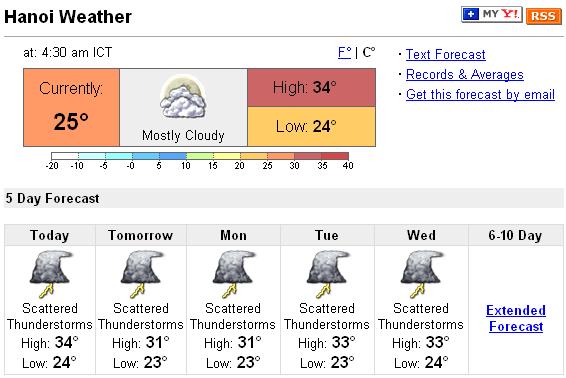
Hanoi Weather

📎 Hanoi
Đăng nhập để trả lời
0
Reuters - Fri Sep 2, 4:06 PM ET

Full serve and self serve gas prices are posted on a sign at a gas station in La Jolla, California September 2, 2005. U.S. states, reeling from skyrocketing gasoline prices in the wake of Hurricane Katrina, have launched probes into alleged profiteering and are mulling temporary relief for drivers by suspending taxes. (Mike Blake/Reuters)


📎 agass
Đăng nhập để trả lời
0
Reuters - Fri Sep 2, 7:06 PM ET A Texas flag and a Houston Astros championship banner hang from the ceiling of the Astrodome where thousands of refugees from Hurricane Katrina have been given shelter, Houston, September 2, 2005. U.S. President George W. Bush, facing scathing criticism of the government response to Hurricane Katrina, acknowledged on Friday the results were unacceptable as he tour the ravaged Gulf Coast and flooded New Orleans. REUTERS/Richard Carson

📎 ah
Đăng nhập để trả lời
0
Reuters - Fri Sep 2, 8:56 PM ET
Homes are submerged by flood waters after Hurricane Katrina struck New Orleans, Louisiana, September 2, 2005. Authorities are still struggling to evacuate thousands of people from hurricane-battered areas as food and water are scarce and looters raided local businesses. Bush said it would take years to recover from the devastation to Alabama, Mississippi and Louisiana. REUTERS/Larry Downing

📎 ahouse
Đăng nhập để trả lời
0
AP - Fri Sep 2, 8:48 PM ET A home surrounded by floodwaters from Hurricane Katrina burns Friday, Sept. 2, 2005 in New Orleans. (AP Photo/David J. Phillip)

📎 aburs
Đăng nhập để trả lời
0
AP - Fri Sep 2, 8:40 PM ET The force of Hurricane Katrina bent a railroad track in Waveland, Miss. as seen on Friday, Sept. 2, 2005. The track slices through the town of roughly 6,500 along the Gulf Coast weast Gulfport, Miss. (AP Photo/Marcio Jose Sanchez)

📎 atrain
Đăng nhập để trả lời
0


If you're going to blame Bush for losing New Orleans

Add LBJ, Nixon, Ford, Carter, Reagan, Bush, and Clinton to the list

I responded to a friend of mine who thinks President Bush has failed utterly in taking charge of the catastrophic damage from Katrina. I put these notes together when I replied.

While I realize that several states are horrendously affected, it is New Orleans that is the most horrific. But my outrage is directed mostly at the municipal and state authorities, not Bush. As he did with the tsunami response, Bush immediately dispatched Navy and Coast Guard. (A summary of military responses is here. They were on the scene on Tuesday. More have been arriving since. The state also immediately deployed the Louisiana National Guard. But as far as I can tell, there was nothing resembling a local emergency plan for these personnel to plug into.

In fact, my single biggest reaction, after sheer horror, was astonishment at the lack of emergency planning that became painfully and tragically evident as Day 2 came and went, with no delivery that I could see of potable water, no rations, no evacuation, no shelters. Nobody seemed to have any instructions for anything. Nobody knew where to go and the Superdome was a fiasco of stupefying proportions. There were inadequate supplies, inadequate plumbing, and no porta-potties. There were conflicting instructions - go to the Superdome, don't go to the Superdome. In the end, the Superdome itself needed evacuation as conditions became intolerable. Emergency vehicles, such as fire trucks, ambulances and police cars were not moved to higher ground before the hurricane hit. It is obvious the city had no plan other than telling people to drive out of the city.

Homeland Security automatically grants authority for emergency management to the "lowest possible organizational and jurisdictional" level", in this case to the City of New Orleans. Every major city is responsible for developing its emergency disaster plans, for rescue and recovery, for evacuation, etc. and to conduct drills. New Orleans obviously hadn't adequately planned or drilled.

I think back to 9/11 and Mayor Giuliani's outstanding leadership in crisis. OK, it's a thankless job, and this is an unprecedented catastrophe, but where is the Mayor of New Orleans? On TV blaming everyone but himself in an obscenity laden rant. Where is the governor? Being quoted spouting platitudes or leading prayer sessions. Neither mayor nor governor appeared to be leading and directing efforts to get the basics - water, food, and shelter - delivered to the refugees, and to ensure security.

We know from that they immediately asked for help, but they do not seem to have implemented plans or put in place mechanism for coordinating with federal, regional, or local agencies to direct the help that was at hand. There was no back-up communication grid; radios and walkie-talkie systems for different organizations operated on different frequencies, making coordination impossible.

Resources were on location on Monday. "FEMA had medical teams, rescue squads and groups prepared to supply food and water poised in a semicircle around the city," but it seems nobody had a plan to get the aid to the refugees or the refugees to the aid. One sees a military ship dispatching a helicopter to lift folks off of rooftop, but there was no designated place to drop them off. The police were also without food and water, and, in most cases, without cars or communication, and were not informed as to where to tell people to go to access water and basics. We now learn that many cops didn't show up for work and presumably evacuated beforehand; so the work force was down in some areas up to 60%. And yesterday, I watched cops on the roof of the police station, and all they were doing was trying to defend the station from thugs below. It's actually good news to learn that the Alabama National Guard MPs just arrived with orders to shoot to kill.

Most of us simply cannot imagine going 3 days with no water or food, so how did any emergency plan envision dealing with this? Why weren't helicopters airlifting in crates of water bottles and rations outside the Superdome, on the highway, and on other dry areas?

How did city officials suppose that supply trucks or transport buses would access islands in a giant cesspool? If they knew that if the city was 80% underwater, there would be no access, what options were available? Plans for amphibious transport vehicles. Or a mandatory evacuation by bus beforehand - by force if necessary - for those with no car. Why did the city authorities wait until the worst had occurred before emptying prisoners in jail onto the street - which, if true, explains in part why we have seen violence and crime. Why weren't prisoners relocated during the main evacuation to secure alternatives? Same with hospital patients. Some were evacuated. Why weren't they all? Probably a combination of inadequate funds, inadequate planning, and the reliance on dumb luck that has seen them through near-misses before.

Which raises questions again about the role of local and state authorities and disaster planning. Any credible emergency plan for New Orleans would have had to contemplate a total loss of electricity, communications, potable water, and reliable ground transportation. So where were the plans for alternatives to or provisions for these basics, and what was the city's arrangements with agencies at the state, regional, and federal level, which were to kick in immediately to coordinate operations? One medical response outfit on cable news reported that it was able to be effective, and a principal reason was the company's investment in back-up communication systems.

I continually fault the White House for failure in communication, and I thought Bush's first address after Katrina hit landfall was underwhelming. I also give him failing marks for not insisting on immediate airtime. But in terms of substance, he gets top marks. He declared a state of emergency the Saturday before the hurricane hit. He dispatched the military at once, and as with the tsunami relief effort, US forces were first off the mark, along with the Red Cross, Salvation Army, and FEMA. Every report I have heard about the rescue efforts by the Navy and Coast Guard have been A+. The breakdown is the coordination and logistics.

Should Bush have imposed martial law on Tuesday, when the levees breached, and sent more military resources? (I don't know the legal or practical aspects of that with respect to Louisiana law and am assuming, for the sake of discussion, that he had the option to declare martial law and assume federal authority.) That's hard to say, without 20-20 hindsight. This catastrophe is unprecedented. Martial law was not required on 9/11, and there were more unknowns - nobody knew if more attacks were planned and would be carried out. But the hurricane emergency was predicted – see here, here,here, here, and here (pdf)-- and specific predictions were eerily accurate.

Did anyone have any idea how under prepared and/or absent the New Orleans authorities and law enforcement would be? Who knew just how much the local and state authorities underestimated the scale of the disaster of a Cat 5 and the resources required? If the Bush administration thought they were adequately prepared, should he have imposed martial law anyway?

I have been skimming the blogs today and could not find anything to indicate what resources and actions were reasonably presumed or expected to be managed by the local, state, and regional authorities. I have found reports that predicted this disaster, including estimates of the number of those refusing to evacuate, damage assessment, etc. I am sure it will come out real soon now, and the local finger-pointing is already beginning.

Austin Bay writes:

Critics grouse that the response to Katrina’s devastation has been abysmally slow. Compared to what? Slow compared to our expectations is the correct answer. Compared to every other nation on the planet, we’re moving at warp speed to address a natural disaster of extraordinary magnitude.
I don't think it's quite that good. By the end of day 2, there was no designated shelter for all those on the highway, and most had been without food or water for at least a day. Where were the supplies? Not stocked in the Superdome. Not stocked in any other building likely to withstand the storm. Did FEMA or the Red Cross have water and food just outside the city? Assuming they did, how and where were they to be delivered? Did FEMA know where and how to deliver the goods? Blaming the Bush administration for any of these failings does not exonerate the failure of the New Orleans authorities to have prepared anything resembling a competent evacuation and disaster plan.

My friend blamed Bush for not making sure that the Army Corps of Engineers secure the levees to be ready for Katrina. (Others, such as Robert F. Kennedy, blame his refusal to sign the Kyoto; for an effective counter to that, check my earlier post). Strengthening the levees to withstand a Category 4 or 5 would have taken decades and billions of dollars. No last-minute quick fix was possible. New Orleans has been on borrowed time since it was founded.

There are two fundamental engineering flaws with the present system. One, the levees were not based on the successful Dutch model, as I noted earlier. (Captain's Quarters has info on the most recent upgrades, which failed). Two, the levee system was designed to withstand a hurricane that would today be described as a Category 3 storm. Why was it not designed to withstand a category 5. There is a lot of blame to go around on that one. But that second fact alone condemned New Orleans.

The Army Corp. of Engineers (ACE) was the principal engineer of the levees. Bush is faulted for recommending a funding cut for ACE projects to improve the levees in order to fund the Iraq war, but that's simply incorrect (http://www.nationalreview.com/robbins/robbins200509020719.asp). (More on Bush's alleged culpability is here. The history of funding the levee and pumping systems is a long one. There have been continuing battles at local, state, and federal levels, as well as problems with the ACE resource management (for severe criticism of the ACE, see here). There are all the usual bureaucratic elements. The patchwork of federal, state, and local agencies responsible for the operation of the levees, sewers, pumping systems, and drainage canals are all petty fiefdoms with perpetual turf wars. That's not a good recipe for agreeing on any levee-improvement project and certainly not good for developing preparations for disaster planning or executing any cohesive implementation of plans.

Is Bush at fault for not insisting on a project to upgrade the system? Even if he had at the beginning of his first term, the project would still be in the feasibility study stage. If a presidents is to be faulted for not insisting that fortification of the levee system withstand a Cat 5 hurricane, then one must blame every president since, at the least, LBJ, who was president when Hurricane Andrew hit.


Posted by: Pat on Sep 02, 05 | 4:01 pm |


http://www.asininity.com/
Đăng nhập để trả lời
0
Thu Sep 01, 2005

Dykes, Polders, New Orleans and Katrina

New Orleans was a poorly managed "polder"The Netherlands has the same problem as New Orleans. Much of that country is below sea level and bound by the sea and rivers. The Dutch have had to cope with floods and fierce storms, especially in the 1950s. Their system of dykes (levees) has kept the water at bay for centuries.
The biggest difference between the Dutch system and New Orleans is that the Dutch use multiple dykes, as this site explains:

Polders

A polder is a piece of reclaimed land, either from the sea or a lake. The principle is very simple. You build a big wall, or dyke, around the piece of land you want. Then you put quite a few big pumps inside the wall and pump the water out. Now you have a piece of relatively dry land.

The problem is that the water seeps back under the dyke so you have to keep pumping. That is the reason why everywhere in The Netherlands there are canals. These collect the water which is then pumped into the sea.

Dykes

The dykes are built to protect the polders, and keep the water from flowing into them. They have to be quite high, due to storms. Also every year more land is claimed from the sea. This means that more dykes have to be built, so in some parts of the Netherlands there are many dykes behind each other. The dyke closest to the sea is called the wakende dijk (guarding dyke), the one after that is the slapende dijk (sleeping dyke) and next ones are called the dromende dijken (dreaming dykes).

Dykes are also built next to the rivers. The rivers have to flow into the sea so they are always above sea level. Quite a lot of The Netherlands is below sea level. The dykes stop the rivers flowing into the polders, just like the dykes by the sea. Usually at rivers there are two dykes behind each other.
(My bolds)

By contrast, New Orleans had just one line of defense on each side of the city. Worse, it was designed to withstand a Category 3 hurricane. Katrina was a category 4 by the time it hit land and its near miss was enough to overwhelm New Orlean's defenses. The authorities knew the city was vulnerable to such an attack, but instead of building better defenses, they relied on dumb luck. That strategy is always going to lose in the long-run. The Army Corps of Engineers, the organization responsible for New Orlean's levees, had plans to beef up the levees, but the funding wasn't available, as this 6/6/2005 article notes:

In fiscal year 2006, the New Orleans district of the U.S. Army Corps of Engineers is bracing for a record $71.2 million reduction in federal funding.
...
There is an economic ripple effect, too. The cuts mean major hurricane and flood protection projects will not be awarded to local engineering firms. Also, a study to determine ways to protect the region from a Category 5 hurricane has been shelved for now.
...
The House of Representatives wants to cut the New Orleans district budget 21 percent to $272.4 million in 2006, down from $343.5 million in 2005. The House figure is about $20 million lower than the president's suggested $290.7 million budget.

It looks like the New Orleans district is now going to cost the tax-payer a lot more now than it would have, had the levees been strengthened.

John Hawkins wonders whether it is now worth rebuilding New Orleans.


Posted by: Pat on Sep 01, 05 | 9:52 am |


http://www.asininity.com/
Đăng nhập để trả lời
0
Tue Aug 30, 2005

It could get a whole lot worse in New Orleans

If the Mississippi levee is breached, God help New OrleansSteven Den Beste has been blogging on the disaster here.

He notes that "let's just hope none of the levees on the river give way" and follows it with a map and a cross-section showing the problem. Kristina has heading north dumping water on the Mississippi's catchment area. If that causes the river to flood, and the Mississippi levees to fail, New Orleans will be submerged. Maybe that's why they want everyone out of the city, now.


Posted by: Pat on Aug 30, 05 | 11:19 pm |

http://www.asininity.com/
Đăng nhập để trả lời
0
.


Superdome New Orleans, Lousian to Astrodome Houston, Texas


http://2see.com/roadtrip/day5/image_map.jpg
Đăng nhập để trả lời
0
<Bài viết đã được chỉnh sửa lúc 2005-09-05 08:47:23HongYen>
From Superdome New Orleans, Louisiana to Astrodome Houston, Texas, it is about a 360 mile drive.

&gt;&gt;&gt;&gt;&gt;&gt;&gt;&gt;&gt;&gt;&gt;&gt;&gt;&gt;&gt;&gt;&gt;&gt;

Hurricane Losses May Top $100 Billion

By VOA News
03 September 2005


Harry and Silvia Pulizzano walk across debris from Hurricane Katrina in search of Silvia's brother's home in Waveland, Miss., on Thursday, Sept. 1, 2005


U.S. economic forecasters say total losses from Hurricane Katrina's devastation could top $100 billion.

In terms of insurance losses alone, industry forecasters say they are estimating payouts to be around $25 billion. Insurance adjusters say they will have a clearer picture of the damage when they are able to enter New Orleans and other Gulf of Mexico coastal cities.

They say losses are likely growing by tens of millions of dollars each day in New Orleans as water damage becomes worse, sporadic fires continue to burn and looters ravage the city.

President Bush has signed a $10.5 billion emergency spending bill for the hurricane area, and said more relief will be needed. He has also appointed his father, former President George Herbert Walker Bush, and former President Bill Clinton to coordinate private fundraising efforts.

&gt;&gt;&gt;&gt;&gt;&gt;&gt;&gt;&gt;&gt;&gt;&gt;&gt;&gt;&gt;&gt;&gt;&gt;

Saturday, 3 September 2005, 11:47 GMT 12:47 UK


Lessons in dealing with disaster


By Daniel Lak
BBC News, Mississippi


Tens of thousands of people on the US Gulf Coast have been made homeless by the devastation unleashed by Hurricane Katrina. And with the number of dead continuing to rise, Daniel Lak considers whether the US could have been better prepared.


Evacuations are taking place, but many people are still stranded
I have learned, or perhaps allowed myself, to be cynical about media coverage of hurricanes.

That is because I spent a year and a half, and four hurricanes, in Florida.

The pattern each time was typical. As each storm approached the coast, coverage of impending doom would get under way.

Meteorologists would speak of "potential for major damage and loss of life".

Wind speeds would be "hurricane force", there would be warnings of a tsunami-like storm surge that would inundate coastal areas and lay waste inland.

Hurricane Katrina is the worst storm ever to hit America and it has done untold damage to lives, livelihoods and communities

Then correspondents would appear on television, staggering and being blown about by high winds on camera and shouting in barely audible terms about what was already obvious to the viewer's eye. It was stormy out there.

Much would be made of traffic signs bending over, tree branches across roads and rain driving horizontally in the wind.

Then invariably, on the next day, under a pristine blue sky, the same reporter would intone about less damage than expected and a lucky break for so and so county.

Of course, there were exceptions.

Hurricane Charley last August ripped apart a trailer home park in a small, but deadly strike on central Florida's west coast.

At the time, I remember feeling shock at the way that comfortable lives could be scattered and broken in such a rich country.

So when I watched concerns mount about Hurricane Katrina, the odd thought of "here we go again" crept into my mind.


Psychological toll


Thousands of people have been made homeless in New Orleans


No, in the event, here we did not go again.

Hurricane Katrina is the worst storm ever to hit America and it has done untold damage to lives, livelihoods and communities.

A survivor in Mississippi called the storm "our tsunami" and that is no exaggeration.

In many ways, Katrina was worse than last year's tsunami because it lasted longer and had wind as well as surging seas to kill people and smash their homes.

But the scale of the psychological impact on survivors and most Americans is similar to that of the tsunami in Asia.

It came out of the blue, at least the intensity of the storm did, and left in its wake damage so severe, so comprehensive, so widespread that fixing it seems impossible, beyond the abilities of mere men and women.

There are other ways, though, in which this crisis is worse than many I have seen in the developing world.

I am sure President Bush and his emergency management people will get on the ball in the coming days and start to offer the sort of comfort and relief that the millions of victims of this massive event require

In India, where I spent many years covering natural disasters, there is a greater sense of resilience and urgency.

I do not know, perhaps it is the frequency with which nature's wrath hits Asian societies, perhaps the level of income, the permanent poor, are hardier and more willing to work together in times of crisis than in a place that values rugged individualism.

"Less me, and more we", as a commentator put it on a radio programme, describing the developing world.

Disaster management


The US government's response to the crisis has been criticised
Also, and I hesitate to say this at such an early stage of the relief effort here, but the authorities in India at least, and some other countries in the region, have become quite good at dealing with severe flooding, or earthquakes, catastrophic events on a tsunami scale, if you will.

Certainly quicker with both material and political comfort to survivors.

It did not take long for huge field hospitals and vast camps of toilets and clean water tanks to be set up in southern India for example, after the tsunami hit there last year, whereas here in Mississippi, the authorities are still begging people to boil their water and watch where they go to the toilet, lest they give or receive some water-borne disease.

And politicians in India, often cursed by their constituents for flocking to disasters to show their concern, compare rather well with a US president whose first big gesture after Katrina's damage became evident is to cut a five-week vacation short by two days to give the matter his full attention.

Now I am sure President Bush and his emergency management people will get on the ball in the coming days and start to offer the sort of comfort and relief that the millions of victims of this massive event require.

They had better.


Frustration

In fact, it was a hurricane named Andrew in 1992 that struck south of Miami that is generally blamed for the first President Bush losing the state of Florida to his challenger Bill Clinton in that year's election.

Neither Bush senior nor the Democratic governor of Florida at the time survived that election. In Florida, they say, that is because it took them days to visit the victims of Andrew amid the wreckage of their homes and lives.

So son, George W, has a salutary lesson staring him in the face.

Not to mention a vast crowd of needy, increasingly frustrated southerners, some of whom even voted for him, demanding more action from their government than they have seen so far.

This is not to say that America's wealth and resourcefulness will not triumph eventually.

Of course they will, eventually.

Some victims' lives will be changed irrevocably for the worst. Others, the vast bulk, I suspect, will get on with it and eventually recover fully.

But in the meantime, a lesson might be learned from India, and other poorer places in Asia, on the best way to deal with disaster. Mind you it is a lesson that I doubt anyone here will heed.

From Our Own Correspondent was broadcast on Saturday, 3 September, 2005 at 1130 BST on BBC Radio 4. Please check the programme schedules for World Service transmission times.

http://news.bbc.co.uk/2/hi/programmes/from_our_own_correspondent/4208066.stm

Đăng nhập để trả lời
0
<Bài viết đã được chỉnh sửa lúc 2005-09-04 23:30:55HongYen>
Hurricane


Tropical cyclone in which winds attain speeds greater than 74 mi (119 km) per hr. Wind speeds reach over 190 mi (289 km) per hr in some hurricanes. The term is often restricted to those storms occurring over the N Atlantic Ocean; the identical phenomenon occurring over the W Pacific Ocean is called a typhoon; a tropical cyclone around Australia is called a willy-willy; and over the Indian Ocean, a tropical cyclone. Hurricanes have a life span of 1 to 30 days. They weaken and are transformed into extratropical cyclones after prolonged contact with the colder ocean waters of the middle latitudes, and they rapidly decay after moving over land areas.

Formation of Hurricanes

A cyclone that eventually reaches hurricane intensity first passes through two intermediate stages known as tropical depression and tropical storm. Hurricanes start over the oceans as a collection of storms in the tropics. The deepening low-pressure center takes in moist air and thermal energy from the ocean surface, convection lifts the air, and high pressure higher in the atmosphere pushes it outward. Rotation of the wind currents tends to spin the clouds into a tight curl; as the winds reach gale force, the depression becomes a tropical storm. The mature hurricane is nearly circularly symmetrical, and its influence often extends over an area 500 mi (805 km) in diameter.

As a result of the extremely low central pressure (often around 28.35 in./72 cm but sometimes considerably lower, with a record 25.91 in./65.8 cm registered in a 1958 typhoon) surface air spirals inward cyclonically (counterclockwise in the Northern Hemisphere and clockwise in the Southern Hemisphere), converging on a circle of about 20 mi (30 km) diameter that surrounds the hurricane's "eye." The circumference of this circle defines the so-called eye wall, where the inward-spiraling, moisture-laden air is forced aloft, causing condensation and the concomitant release of latent heat; after reaching altitudes of tens of thousands of feet above the surface, this air is finally expelled toward the storm's periphery and eventually creates the spiral bands of clouds easily identifiable in satellite photographs.

The upward velocity of the air and subsequent condensation make the eye wall the region of heaviest precipitation and highest clouds. Because the outward increase in pressure is greatest there, the eye wall is also the region of maximum wind speed. By contrast, the hurricane eye is almost calm, experiences little or no precipitation, and is often exposed to a clear sky. Temperatures in the eye are 10°F to 15°F (5°C—8°C) warmer than those of the surrounding air as a result of sinking currents at the hurricane's core.

Movement and Occurrence of Hurricanes

Hurricanes and typhoons usually move westward at about 10 mph (16 kph) during their early stages and then curve poleward as they approach the western boundaries of the oceans at 20° to 30° lat., although more complex tracks are common. In the Northern Hemisphere, incipient hurricanes usually form over the tropical Atlantic Ocean and mature as they drift westward; hurricanes also form off the west coast of Mexico and move northeastward from that area. Between June and November, an average of six tropical storms per year mature into hurricanes along the east coast of North America, often over the Caribbean Sea or the Gulf of Mexico. Two of these storms will typically become major hurricanes (categories 3 to 5 on the Saffir-Simpson scale). One to three hurricanes typically approach the U.S. coast annually, some changing their direction from west to northeast as they develop; as many as six hurricanes have struck the United States in one year. Hurricanes and typhoons of the N Pacific usually develop sometime between May and December; typhoons and tropical cyclones of the Southern Hemisphere favor the period from December through April; Bay of Bengal and Arabian Sea tropical cyclones occur either between April and June or September and December, the times of the onset and retreat of the monsoon winds.

Damage Caused by Hurricanes

High winds are a primary cause of hurricane-inflicted loss of life and property damage. Another cause is the flooding resulting from the coastal storm surge of the ocean and the torrential rains, both of which accompany the storm. The Saffir-Simpson scale is the standard scale for rating the severity of a hurricane as measured by the damage it causes. It classifies hurricanes on a hierarchy from category 1 (minimal), through category 2 (moderate), category 3 (extensive), and category 4 (extreme), to category 5 (catastrophic). A supertyphoon is equivalent to a category 4 or 5 hurricane.

Only three category-5 storms have hit the United States since record-keeping began–the 1935 Labor Day hurricane, which devastated the Florida Keys, killing 600; Hurricane Camille in 1969, which ravaged the Mississippi coast, killing 256; and Andrew in 1992, which leveled much of Homestead, Fla. Hurricane Mitch in 1998 was a category-5 storm at peak intensity over the western Caribbean, and Gilbert in 1988 was a category-5 storm at peak intensity and is the strongest Atlantic tropical cyclone of record. The 1970 Bay of Bengal tropical cyclone killed about 300,000 persons, mainly by drowning. In the United States, Hurricanes Hugo (1989) in South Carolina and Opal (1995) and Charley, Ivan, and two others (2004) in Florida caused billions of dollars worth of damage. Other hurricanes can still cause major flooding and damage, even when downgraded to a tropical storm, as did Hurricane Agnes (1972).

To decrease such damage several unsuccessful programs have studied ways to "defuse" hurricanes in their developing stages; more recent hurricane damage-mitigation steps have included better warning systems involving real-time satellite imagery. A hurricane watch is issued when there is a threat of hurricane conditions within 24—36 hours. A hurricane warning is issued when hurricane conditions (winds greater than 74 mph/119 kph or dangerously high water and rough seas) are expected in 24 hours or less.

Bibliography

See B. Tufty, One Thousand One Questions Answered about Hurricanes, Tornados, and Other Natural Air Disasters (1987); R. A. Pielke, The Hurricane (1990); J. Barnes, Florida's Hurricane History (1998); J. Barnes, North Carolina's Hurricane History (1998); D. Longshore, Encyclopedia of Hurricanes, Typhoons, and Cyclones (1998); E. Larson, Isaac's Storm (1999).

http://education.yahoo.com/reference/encyclopedia/entry?id=hurrican
Đăng nhập để trả lời
0
HHS Chief: Katrina Death Toll in Thousands

AP - 31 minutes ago

WASHINGTON - Health and Human Services Secretary Michael Leavitt said Sunday the death toll from Hurricane Katrina and its aftermath is in the thousands, the first time a federal official has acknowledged what many feared. Leavitt said he couldn't provide a precise number on the impact of the devastation, but when asked if it was in the thousands, he told CNN's "Late Edition," "I think it's evident it's in the thousands."

http://news.yahoo.com/fc/world/hurricanes_and_tropical_storms

&gt;&gt;&gt;&gt;&gt;&gt;&gt;&gt;&gt;&gt;&gt;&gt;&gt;&gt;&gt;&gt;&gt;&gt;&gt;

AP - Sun Sep 4,11:03 AM ET A makeshift tomb at a New Orleans street corner conceals a body that had been lying on the sidewalk for days in the wake of Hurricane Katrina on Sunday, Sept. 4, 2005. (AP Photo/Dave Martin)

📎 atomb
Đăng nhập để trả lời
0
Reuters - Sun Sep 4,11:28 AM ET A large fire burns in New Orleans September 3, 2005. Utility operator Entergy Corp. will re-enter New Orleans on Sunday with National Guard escorts to begin assessing damage caused by Hurricane Katrina and subsequent floods, the company said. REUTERS/Jason Reed

📎 aburns
Đăng nhập để trả lời
0
Reuters - Sun Sep 4,11:51 AM ET The elderly and sick are evacuated by U.S. Air Force military rescue workers from the triage unit inside the New Orleans International Airport as evacuations of Hurricane Katrina continues, September 4, 2005. Hurricane Katrina has devastated New Orleans and U.S. Gulf Coast states, killing hundreds of people and possibly thousands, and drawing support pledges from rich and poor, traditional friends and foes of the United States. REUTERS/Shannon Stapleton

📎 a
Đăng nhập để trả lời
0
Authorities Race to Finish New Orleans Evacuation

By VOA News
04 September 2005


A group of residents waiting to board a U.S. Coast Guard helicopter to take them to the airport in New Orleans


Authorities are working to evacuate the last hurricane survivors from New Orleans before starting the gruesome task of collecting bodies from the U.S. coastal city.

Officials say 42,000 people were evacuated on Saturday, including everyone who had gathered at New Orleans' football stadium and convention center.

But thousands of people remain trapped in buildings surrounded by floodwaters, six days since the hurricane hit. Meanwhile, corpses have been sighted on porches, sidewalks, and flooded streets, sparking fears of an epidemic.

Some 200 New Orleans police have quit their jobs because of the dire conditions and slow government response to the tragedy.

On Saturday, President Bush acknowledged that many hurricane survivors were not getting the help they need - a situation he called "unacceptable."

The president has dispatched top officials including Defense Secretary Donald Rumsfeld to New Orleans to directly oversee rescue and relief efforts. Mr. Bush will return to New Orleans on Monday - his second visit there in four days.

........................

http://www.voanews.com/english/2005-09-04-voa4.cfm
Đăng nhập để trả lời
0
New Orleans Businesses Begin Cleanup
AP - 37 minutes ago
NEW ORLEANS - Some business owners were being allowed back into the city Saturday to get a head start on opening the rollicking bars, stores and restaurants that keep the good times rolling in New Orleans.

http://news.yahoo.com/fc/world/hurricanes_and_tropical_storms

&gt;&gt;&gt;&gt;&gt;&gt;&gt;&gt;&gt;&gt;&gt;&gt;

AP - Fri Sep 16, 7:03 PM ET Under the gaze of a Mardi Gras mask, a little bit of normalcy appears on the sidewalk at Patout's Restaurant in the French Quarter of New Orleans on Friday, Sept. 16, 2005. (AP Photo/Paul Sancya)

📎 aa
Đăng nhập để trả lời
0
US Will Accept Venezuela's Offer of Aid for Hurricane Victims


By Bill Rodgers
Washington
02 September 2005


Roger Noriega


A top U.S. State Department official says the United States will accept Venezuela's offer of humanitarian aid in the aftermath of Hurricane Katrina, but does not view the offer as a signal of change in the strained relations between the two countries. The official made the comment to VOA Friday in a wide-ranging interview as he prepares to leave his post later this month.

U.S. Assistant Secretary of State for Western Hemisphere Affairs, Roger Noriega, says Washington has received offers of relief assistance in the wake of Hurricane Katrina from some 15 countries in the Americas, including Venezuela.

The oil-rich government of President Hugo Chavez earlier this week offered energy and cash assistance to the United States, including sending some two-thousand soldiers, firefighters and others to help with the relief efforts.

http://www.voanews.com/english/US-Will-Accept-Venezuelan-Offer-of-Aid-for-Hurricane-Victims.cfm
Đăng nhập để trả lời
0
Friday, 2 September 2005, 22:18 GMT 23:18 UK

World mobilises to aid US victims


The US was considering dozens of offers of international assistance


More than 44 foreign governments and international organisations have offered aid to help with the Hurricane Katrina relief effort.
Sri Lanka and Indonesia, who were recipients of US assistance after the tsunami, were among the list of potential donors.

Cuba and Venezuela put aside their differences with the Bush administration to offer assistance.

The US state department said all the offers were being examined.

Returning a favour

President Hugo Chavez of Venezuela - a major oil exporting country - said he had offered to send cheap fuel.

The state department has not decided whether to accept it.

The United States is so often at the forefront of international aid efforts to help less fortunate nations

Foreign Minister Alexander Downer
Singapore sent Chinook helicopters following a request by the US to Fort Polk, Louisiana, to help to ferry supplies and undertake airlift missions.

Israeli Prime Minister Ariel Sharon wrote to President George Bush offering medical teams, saying they could be ready within 24 hours.

Sri Lanka said it was donating $25,000 (£13,500) to the American Red Cross, while Japan has pledged $200,000 and Australia, $8m (£4.3m), to the charity.

"The United States is so often at the forefront of international aid efforts to help less fortunate nations," Foreign Minister Alexander Downer said.

Developing nations, normally recipients of US aid, offered to become donors, such as Honduras, Guatemala and Jamaica.

The Paris-based International Energy Agency (IEA), representing 26 countries, agreed to release the equivalent of two million barrels of oil per day from emergency reserves.

The extra supply is aimed at helping the markets deal more effectively with the disruption caused by Hurricane Katrina, said the IEA.

http://news.bbc.co.uk/1/hi/world/americas/4210264.stm
Đăng nhập để trả lời
0
Annan expresses sympathy for Hurricane Katrina victims

31 August 2005 – United Nations Secretary-General Kofi Annan today expressed his sympathy for victims of Hurricane Katrina in the United States and extended condolences to those affected by the storm.

In a statement issued by his spokesperson, the Secretary-General said he is deeply saddened by the loss of life and large-scale destruction wrought by Hurricane Katrina along the US Gulf Coast. He also extended condolences to all the victims and their families, it added.

“I hope, in the coming weeks, all will be done to provide support for those who need it,” Mr. Annan said later at a press briefing. “There has to be effective coordination in these efforts. And I think efforts are being made to ensure that assets are in place and effective coordination is organized because without that, it is going to be very, very difficult to get urgent help to all those who need it, and to help them rebuild,” he said in response to a question.

Earlier this week Sálvano Briceño, Director of the Secretariat of the International Strategy for Disaster Reduction (ISDR), called for more systematic prevention and mitigation measures, noting that the devastation wrought by Hurricane Katrina and recent deadly floods in Central Europe and Switzerland prove that anyone can be affected, any day, anywhere by natural disaster.

He also said that recent weather-rated catastrophes provide an opportune moment for the media to pass the message that it is important for all to be prepared in the future.

http://www.un.org/apps/news/story.asp?NewsID=15623&Cr=disaster&Cr1=hurricane
Đăng nhập để trả lời
0
Houston Opens Two More Refugee Centers

By MICHAEL GRACZYK, Associated Press Writer
29 minutes ago

HOUSTON - Texas opened two more giant centers for victims of Hurricane Katrina on Friday after refugees filled Houston's Astrodome to capacity.

Mayor Bill White declared that the city's convention center and an exhibition hall would accept more hurricane survivors, and conventions for the coming weeks would be canceled.

"We see the tragedy which is ongoing in New Orleans, and we are doing the best we can to make sure when people get to Houston they have a decent place to stay," White said.

As shelters in Houston, Dallas and San Antonio filled up, the governor's office reached out to the state's mid-sized cities to find additional space.

"This is just the beginning of what will be many months," Gov. Rick Perry said. "It will be a long effort trying to help people rebuild their lives and get a sense of normalcy, safety in what is a very trying time."

Elsewhere, officials from as far away as Utah, West Virginia, Wyoming and Michigan said they would also accept refugees. Elected leaders were considering various places to house them, including military barracks and an empty shopping mall.

Perry's office announced that thousands more evacuees would be directed to shelters in Austin, Corpus Christi, Lubbock, Amarillo and El Paso. The governor also deployed 1,000 Texas National Guard troops to provide security and support evacuation operations.

Despite crowding at the Astrodome, more buses were being loaded Friday at the Superdome in New Orleans, where conditions had become desperate as thousands struggled with lack of supplies, clogged plumbing and no air conditioning.

When the Astrodome filled, Katrina refugees who had finally arrived by bus were left in limbo for more than two hours before they were redirected to the exhibit hall.

Janetta Arnold was among those who found room at the Astrodome. She was rescued with 13 relatives after being stranded for three days on a hurricane-ravaged New Orleans highway.

"I was able to get a shower last night," the 36-year-old grocery store cashier said Friday. "I am grateful for what the people here in Houston have given us."

A wall at the stadium was crammed with scraps of paper, each showing a written message seeking friends or relatives or telling loved ones the writer was all right.

"Mom: If you see this...," a typical message started, then listed instructions describing where a person could be found on the noisy Astrodome floor, where many evacuees sat somber amid restless children with little to do.

In San Antonio, the former Kelly Air Force Base began accepting people on buses that were turned away from the Astrodome. Up to 7,000 people could be accommodated in an air-conditioned office building and warehouse.

Plans were being made for alternative sites in San Antonio once those buildings filled.

As people arrived, they were given pink lemonade and allowed to use portable restrooms. Others arrived on military helicopters directly from New Orleans and were met by people with food and medicine.

Many refugees showed up hot, dazed and exhausted. They are given toothbrushes, soap, washcloths and other toiletries when they signed in. Aides questioned them about health needs.

Inside the Astrodome, doctors had trouble keeping up with everyone needing treatment.

"Many people might think there are enough people here, and there are not. We just need help," said Dr. Steven Glorsky, who had treated evacuees for heart attacks, open wounds and diabetes. "We have a crisis in there."

A few people were arrested in the Astrodome, although Sheriff Tommy Thomas did not have an exact count. He said some men were arrested for going into the women's showers. Others were arrested for fighting over cots.

Dr. Stuart C. Yudofsky, chairman of psychiatry at Baylor College of Medicine in Houston, said about 30 psychiatrists from around Houston are assisting with the mental health needs of those staying inside the Astrodome.

"The Astrodome was designed to have maybe 20,000 people for six hours at the most for something upon which they are all focused," Yudofsky said. "To be there 24 hours a day, seven days a week, for an indeterminate period of time, that experiment has never been run — and we are trying to do that right now."

Myron Johnson, 27, was just happy to get three meals, a cot and some fresh clothes. The Pizza Hut worker fled his New Orleans apartment Monday in nothing but boxer shorts, leaving behind nine relatives.

"I don't know where my family is. I'm here by myself," he said outside Reunion Arena in downtown Dallas. He was frustrated he had not been able to contact loved ones.

"I thank God for the good volunteers of Texas, but all they can do is try to keep your spirits up," he said. "I just want to know that they're OK so I can salvage the rest of my life."

The state was considering using housing vouchers to allow displaced Louisiana residents to move into apartments, the governor's office said.

Along with Texas, other states such as Illinois and Maryland offered to let hurricane survivors enroll their children in public schools.

In South Carolina, U.S. Rep. Jim Clyburn proposed housing up to 5,000 refugees in unused military barracks, an empty mall and other large buildings in Columbia.

Johnson held out hope that he would eventually return to New Orleans.

"In my heart, I believe there will be a Big Easy again," he said. "A better Big Easy."


http://news.yahoo.com/news?tmpl=story&u=/ap/20050903/ap_on_re_us/katrina_refugees_hk4
Đăng nhập để trả lời
0
«« « 1 2 3 4 5 » »»